Catch Me Here Too!
This form does not yet contain any fields.

    Member of Romance Writers of America and Rainbow Romance Writers Chapter


    Login


    Thursday
    Apr122012

    On Entering A Contest, Winning Long List Status And Receiving A Critique

    Some time in the not so distant past—maybe September 2011, I decided to enter a contest. I chose the one I did for all the wrong reasons: someone who knows nothing about such things suggested it, it’s an Irish contest and I’m Irish. I know, but there you have it. Fortunately, it turned out to be an enlightening experience. I recommend it!

    Fish Publishing is an independent publishing company in County Cork. My family is from County Kerry, in the West of Ireland. Fish Publishing has been running writing contests since 1994. Its stated goal is to encourage and promote new writers.

    The annual Fish International Short Story Prize has become an established event on the literary calendar, and according to their website, “…many authors published in the Fish Anthology have consequently achieved further publication and gone on to have flourishing writing careers.”

    They held another competition that I entered. It’s the Fish Memoir Prize. I entered a short story that I had published on Amazon, The Guy in Frankie’s Hatbox, and it garnered a Long List position. LOL. Long List? How long was the long list? Did I win or lose?

    As it turns out, Fish Group gave me the option when I entered the contest to have my work critiqued. I reprint it here, the good and the not so good, because I think this kind of thorough analysis would benefit most writers, especially Indies. Anyway, in the interests of helping other writers, I thought it might be interesting to share with you what they shared with me.


    Oh, and the Long List? It was over 900 entrants. So, The Guy in Frankie’s Hatbox didn’t make the Short List, or win the Prize, but, hey, it wasn’t a terrible showing either. Oh, I know it's cool to say you're always learning your craft, but, it's probably not so cool to reveal just exactly what you don't know. But I think if you're not always sharing your experiences about learning your craft, even the easy stuff you and everyone else think you should already know, then you're never going to get any better than you are right now. No place for status quo in a writer's life. So uncool or not, here's what they said about my story:


    The title intrigues and attains more layers of meaning as the fiction unfolds. The process of concretizing the complexity of emotional states through the observation and exploration of a small detail, such as hats, work particularly well to structure and drive the momentum of this memoir. Sharply observed detail convinces the reader they are surrounded by this fictional universe and the first-person narrative perspective allows smooth access to the protagonist’s thoughts and observations and is imbued with sufficient exposition for the reader to draw inferences and conclusions about the predicament of the other key characters, notably Frankie.

    This is the strength of this story; the writer’s control of narrative distance which subtly and entertainingly steers the reader’s gaze, allowing implication to pad out the narrative. Reproducing the child’s logic, by its realism and the manner in which children make odd and yet obvious connections ("...she was Swedish, so I wasn’t sure if Swedish people knew about hats.") adds real resonance to the narrative fixing the reader’s gaze firmly behind that of the young girl. Be wary of straying too far from the vocabulary used by the narrator as a slip in this direction can break the illusion of the character’s consciousness. Notably a character who asks “What’s ‘sophisticated?’” is unlikely to narrate using an abstract phrase such as “I feigned nonchalance as I surreptitiously...” but rather this would be concretized as a physical gesture, i.e., “I fiddled with the perfume decanters on the dressing table, scanning the room for signs of hats or feathers”

    The reflective voice, crucial to the memoir genre is interwoven seamlessly and the flashbacks are compelling and unobtrusive. The narrative arc is crafted and consistent and the shift between the forces that make up a solid narrative (description, action, summary and dialogue) are all evident and balanced. The dialogue, although concise and revelatory contains too many dialogue tags  (she asked, I protested) that risk slowing the flow. By only employing them when they are necessary i.e. to avoid confusion about who is talking when, the resulting conversation will feel more vivid and continuous. Adding accompanying gesture and actions can also help reveal the underlying tensions. 

    “Easter’s big... June is next, uh huh. Wedding season, you know. You’ve got both mothers, all the bridesmaids, usually, and sisters and aunts of the bride and bridegroom. You never call them grooms,” she added. “Grooms clean out horse stalls.”

    “What about Christmas?”

    “Not as big as it used to be, women these days are turning to scarves.” She pulled the corners of her mouth down in a gesture of annoyance.

    “Scarves are for necks, but winter hats are not so exciting,” she admitted. “Spring is when you get your great hats. I’m going to be working non-stop up to Easter, uh huh.” She sipped her Port and stared off into the distance.

    The denouement in the closing pages of the story that reveals the mother’s secret hidden in the hat box and the narrators new found perspective in terms of her knowledge of her mother is well structured although the pace could be slowed here to give the information increased dramatic impact. Similarly, the traction of the narrative slows after this epiphany and the writer may want to consider cutting passages such as the polka dot dress piece as it is not inherently crucial to the storyline. The ending pulls the memoir together and leaves an upbeat lasting impression. In conclusion, therefore, the writer has produced an entertaining and poignant short memoir peppered with beguiling characters in a vivid setting and time.

    For my upcoming historical novel, The Blondness of Honey, my editor, Theresa Stevens, said the exact same things about using too many dialog tags and not using enough accompanying gestures and actions! Fiction is like a signature, I think. Who you are and what you know shows up whether you mean it to or not. I received the results of this contest not too long ago, but I called in Theresa Stevens in December because I just knew I needed a professional editor. And boy is she!

    The first edit (which was my fourth or fifth draft) came back with so many red lines and red-boxed comments I got dizzy. For a week, I couldn't think. For two weeks I was really glad I had my day job, and there was an unrelenting urge to keep it---forever? Finally, after about three weeks, I sat down and pored over the edits page by page.

    I first feared I would go blind. Then I feared I wouldn't. Who the HELL is Theresa Stevens and why does she hate me? And then. AND THEN. It began to make sense. Not only did she send back my 540 pages in a lovely shade of red, she sent me three mp3 downloads in which she walked me through some of the more important things. She has a lovely voice---uh, no, it doesn't make the content any easier to absorb. But what I learned was priceless. I finally sent her a completely re-written first chapter. She liked it. "Keep moving forward! You're really doing very well with learning a lot of material in a short period."

    I had one POV malfunction and few too many commas, because I love them dearly, and I said the word "said" two many times on page one. But...it was good. Is good. 

    “Problem solved!” she said. She swiped the air with her hand and erased the imaginary editor’s marks.

    Heh.

    Wednesday
    Jan112012

    Rainbow Romance Writers, And World Debut of Cover!

    I was honored to be part of the Author Spotlight series in the Rainbow Romance Writers Pot of Gold Newsletter recently. Rainbow Romance Writers is the GLBT Chapter of Romance Writers of America, and I'm a proud member of both--RWA for five or six years, Rainbow Romance since its inception. 

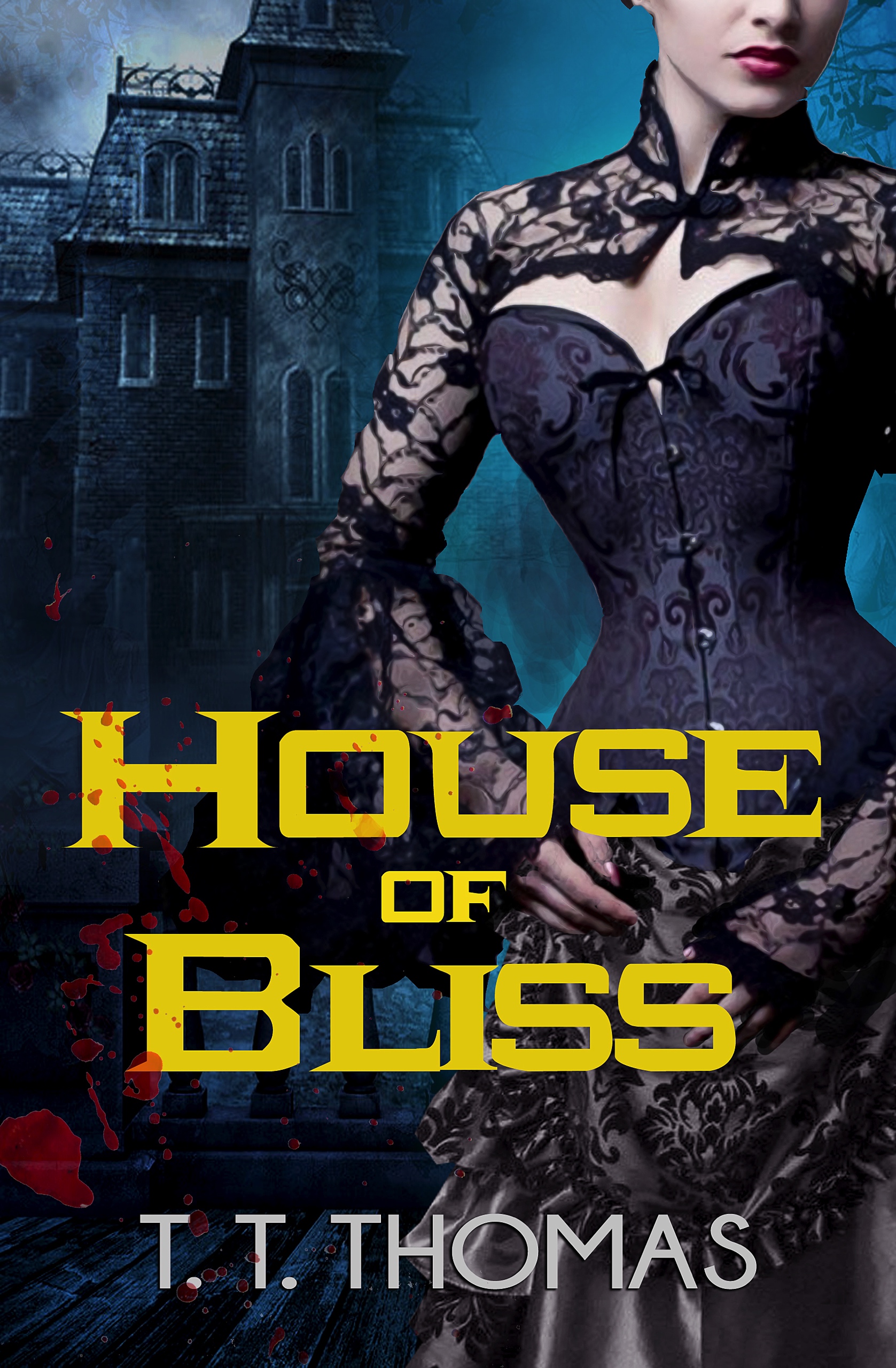
    One of the most exciting aspects of the spotlight was my decision to have the world debut of the cover for my upcoming historical romance The Blondness of Honey in the newsletter. And, here it is!

    Cover Designer Patty G. Henderson deserves all the credit, and I think she did a fabulous job. There was some realization that to properly depict the main relationship in the novel, the cover might have to be unusual in its up-front and right there treatment. Patty and I decided to let the cover speak its name, to be what it is: A romance between two women that takes place in 1893 America.

    I was thrilled to be able to talk about the book and my writing in the Rainbow newsletter, and if you are a GLBT writer, I encourage you to join Romance Writers of America so that you can then join the RRW on-line chapter. 

    If you are a reader, take a look at the Rainbow Romance Writers public site and check out all the other Author Bios--there's so many fabulous authors in our community. I'm proud to be part of it.

    The Blondness of Honey will be released in eBook and print in the Summer of 2012. 

    The Full Author Spotlight Interview is listed here.


    Friday
    Aug262011

    New Fiction: The Guy In Frankie's Hatbox


    A young girl befriends an older woman, Frankie Bristol, in her neighborhood.  They hit it off when the girl realizes Frankie is a fashion icon, at least at the hat shop where she works and in the young girl’s mind. The girl sells greeting cards door-to-door to earn some extra spending money, so she figures Frankie launched her sales career by being her first customer. When Frankie takes ill and can no longer sell hats at the shop, the young girl meets some hard truths about living and hatboxes.


    An Excerpt

    Next thing I knew, my mother was walking back alone. By the time she reached our house, an ambulance had pulled up in front of Frankie’s house, lights flashing, but no siren. Frankie’s front yard blinked red and yellow when the lights hit the grass.

    My mom went straight to the kitchen, shaking her head. She turned on the kettle for a cup of tea, and sat down at the kitchen table. “Frankie’s sick,” she said. “Your father is with her, and they’re going to take her to the hospital. He has to give a statement.”

    I was alarmed because I thought my dad was going to the hospital with Frankie. My mom explained: “No, he just has to give a statement. She has no living relatives. She’s senile and can’t take care of herself. It’s very bad inside her house. It’ll have to be gone through and thoroughly cleaned. She probably has bugs, maybe even mice.” 

    If you knew my mother, you knew that mice were the worst things you could have in your house.  Dust was a close second, though. I once came home from school and found her sitting on top of the dining room table. “Just come in,” she said, as if there were nothing at all unusual about her sitting on the table. “Come in, turn on the kettle—I’m dying for a cup of tea—then call your father and tell him to come home.” I did as she said because, frankly, I was a little worried about her.

    After I made the cup of tea, I called my dad at the office. Then, I covered the phone and said, “Mom? Daddy wants to know why he has to come home.”  She choked on the sip of tea she had just taken and said, “Because there’s a god damn mouse in this house, and I’m not moving until your father kills it.” I relayed the information to my father, who said put her on the phone, but the cord wouldn’t reach, and she wasn’t moving, so I said, “Dad, you better just come home.”

    He caught the mouse, but I don’t think he killed it. I think he took it out in the field behind our house and let it go. I asked my dad if the mouse was dead. “Yep, I think your mom scared it to death,” he said with a grin. 

    “You didn’t kill it, did you, Dad? Mom’s gonna be all mad if she finds out.”

    “Don’t be discussing mice with your mother,” was all he said.

    My mom announced that she was in no mood for cooking, so I said “Why don’t we all walk down to Lou’s Drive-In for a chilidog, fries and a root beer float?” I looked at my dad and smiled. He stared at me hard for a second, and then grinned.

    “Sounds like a pretty good idea, Margaret,” he said to my mom. “Let’s get you out of the house for a while.” 

    On Amazon

    On Barnes & Noble

    On Smashwords


    Friday
    Aug262011

    New Fiction: Bread and Butter

    Two women meet during a business transaction and as their business encounter leads to a friendship and socializing, at least one of them begins to fall for the other one.  But one of them has a husband. Is this a completely one-sided fantasy “affair” on the part of one of the women, or is there more to this than meets the eye? 

    An Excerpt

    I wondered if there was any possible way one could consider kissing not sex. Not damn likely considering the kind of kiss I knew was our destiny. The kiss would be the kiss equivalent of an Oscar, a Pulitzer, being born into royalty and the salting of hot, oil-dripping tortilla chips. It would be long, prolonged, open, moist and so close that breathing would be all but impossible. The kiss would be---no: There would be no kiss. 

     Kissing is dangerous. Kissing is a means to an end and yet, an end in itself. Oh, I still wanted to kiss her; I would forever dream of doing so. I would even descend, no doubt, into the pitiful quagmire of kissing someone else just to avoid kissing her. I hoped, I think I even prayed, that another pair of lips would present themselves soon. But I was doubtful that even a French kiss, with a French woman, in a French restaurant, on the French Riviera with lots of someone else's French francs would ever cure me of what I now recognized as the chronic condition best known by it's street name as falling in love.


    On Amazon

    On Barnes & Noble

    On Smashwords

    Friday
    Aug262011

    New Fiction: My Second Stupid Suicide


    Jane has tried to kill herself for the second time---and once again, she proves to be inept at it.  Her psychiatrist suggests Jane keep a journal. In that journal, which Jane reads aloud in her therapy sessions, she explains, in her quirky, free-associating way, what love has to do with it.  Is she nuts…or merely human?

    An Excerpt

    I personally had never prayed to St. Christopher, because he was the patron saint of safe travel, and I never went anywhere worth praying about returning from safely. But I did grow up thinking that sainthood, like love, was forever, and I was very upset when they de-commissioned his sainthood. Think of all those medals. Another harmless tradition shot to hell as far as I was concerned. Another nun named Sister Mary Christopher on her knees praying for an aka.


    On Amazon

    On Barnes & Noble

    On Smashwords